Notice that the buyer is willing to pay whatever prices the seller wants; this is when the market is said to be bullish. In a bullish market, the prices tend to move up. (View Highlight)
Once the order hits the market, the stock exchange (through their order matching algorithm) tries to find a seller who is willing to sell you 200 shares of Infosys at 3030.
Now the seller could be one person willing to sell the entire 200 shares at 3030, or it could be ten people selling 20 shares each, or two people selling 1 and 199 shares, respectively. The permutation and combination do not matter. From your perspective, all you need is 200 shares of Infosys at 3030, and you have placed an order for the same. The stock exchange ensures the shares are available to you as long as sellers are in the market. (View Highlight)
By owning the shares, you are entitled to corporate benefits like dividends, stock splits, bonuses, rights issues, voting rights, etc. We will explore all these shareholder privileges at a later stage. (View Highlight)
The holding period is the period you intend to hold the stock. You may be surprised that the holding period could be as short as a few minutes to as long as ‘forever.’ (View Highlight)
This is the return that your trade or investment generates in absolute terms. It helps you answer this question – I bought Infosys at 3030 and sold it at 3550. How much percentage return did I generate? (View Highlight)
The formula to calculate is – [Ending Period Value / Starting Period Value – 1]*100 (View Highlight)
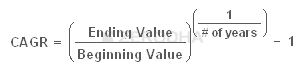
CAGR helps you answer this question – I bought Infosys at 3030, held the stock for two years, and sold it at 3550. At what rate did my investment grow over the last two years? (View Highlight)
A trader is a person who spots an opportunity and initiates the trade with an expectation of profitably exiting the trade at the earliest given opportunity. A trader usually has a short-term view of markets. Trader is alert and on their toes during market hours, constantly evaluating opportunities based on risk and reward. A trader is unbiased toward going long or going short. (View Highlight)
Day Trader – A day trader initiates and closes the position during the day. He does not carry forward trading positions overnight. A day trader is risk-averse and does not like taking an overnight risk. (View Highlight)
Scalper – A type of day trader. A scalper usually trades very large shares and holds the stock for less time to make a small but quick profit. For example – a scalper buys 10,000 shares of TCS as 2212 at 9:15 and sells it 2212.1 at 9.16, ending up making 1000/- profit in this trade. (View Highlight)
Swing Trader – A swing trader holds on to the trade for a slightly longer; the duration can run anywhere between a few days to weeks. For example – Buy 100 shares of TCS at 2212 on 12th June and sell it at 2214 on 19th June. (View Highlight)
An investor is a person who buys a stock expecting a significant appreciation in the stock. The investor is willing to wait for the investment to evolve. The typical holding period of investors usually runs into a few years. (View Highlight)
Growth Investors – The objective here is to identify companies expected to grow significantly because of emerging industry and macro trends. A classic example in the Indian context would be buying Hindustan Unilever, Infosys, and Gillette India back in 1990s. (View Highlight)
Value Investors – The objective here is to identify good companies irrespective of whether they are in the growth or mature phase but beaten down significantly due to the short-term market sentiment, thereby making a great value buy. An example of this in recent times is stock tanking in the Covid crash of March 2020. Due to short-term negative sentiment, almost all the good stocks were beaten down significantly around March/April 2020, only to post a V-shaped recovery in the subsequent months. (View Highlight)

 (View Highlight)