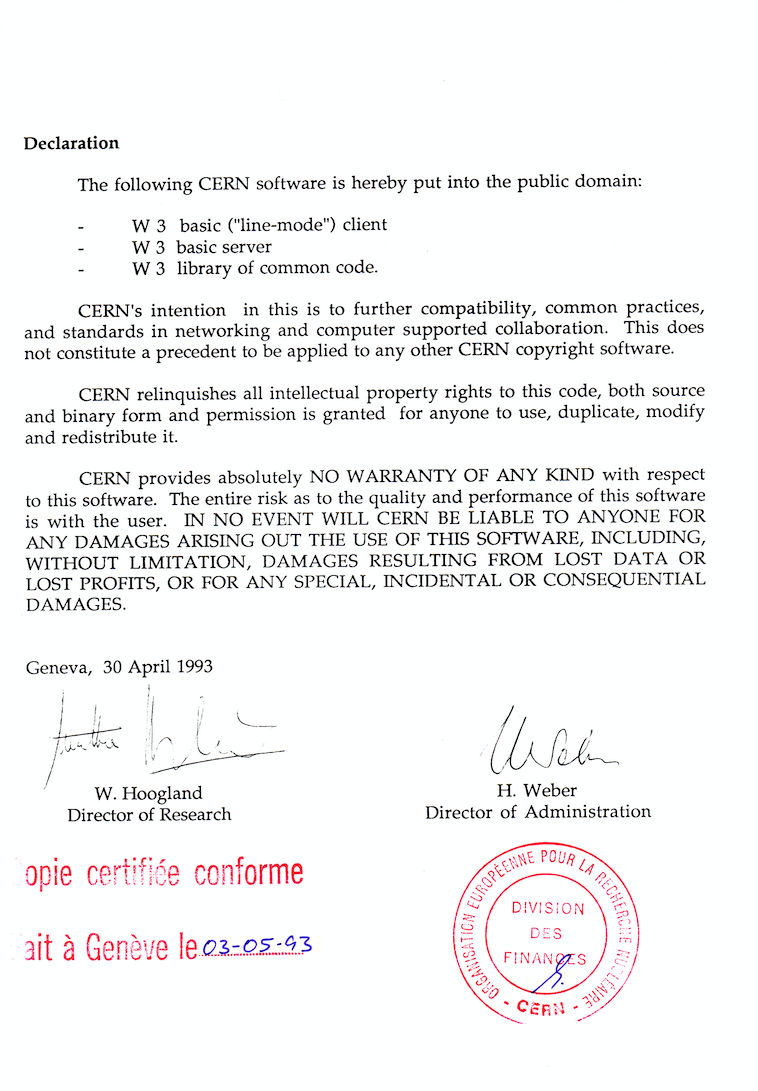
Thirty years ago, Tim Berners-Lee and CERN gave the world a gift. After some internal discussions, CERN stamped (quite literally) its approval on a document, relinquishing all intellectual property rights to the World Wide Web and entering it into the public domain. It wasn’t a decision that was altogether altruistic—there were certainly logistical and operational reasons for the choice—but it was a decision grounded in optimism and ambition. It radically changed the trajectory of the web, enabling an openness and accessibility that most technologies don’t come close to reaching. (View Highlight)
But also, and this is important to mention, they believed in the web and in Berners-Lee. The folks making these decisions understood its potential and wanted the web to flourish. This wasn’t a decision driven by profit. It was a generous and enthusiastic vote of confidence in the global ambitions of the web. (View Highlight)
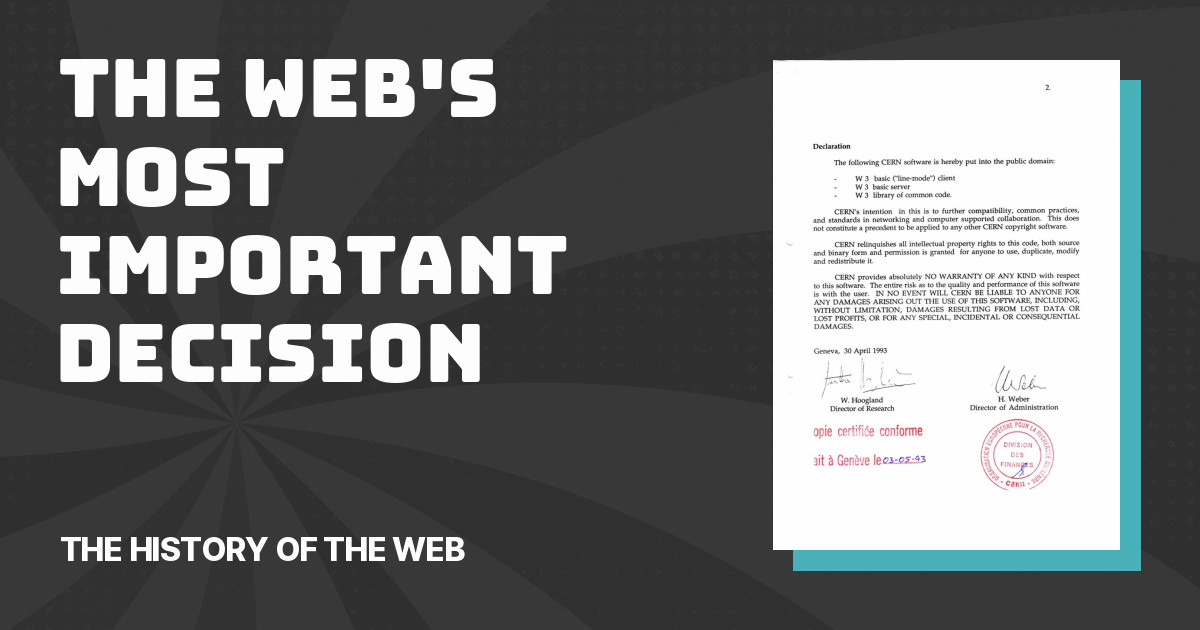
And so, on April 30 1995, with a half-page document and a few signatures, CERN made it official. Nobody owned the web, and the web wasn’t licensed. It was simply a part of the world, for anybody to use, distribute, or modify. It looked like this: (View Highlight)
 (View Highlight)